



Home Office Deduction Rules: What Qualifies and How to Claim
If you work from a spare bedroom or a corner of your living room, you've probably wondered whether you can write any of it off. The home office deduction rules trip up a lot of self-employed filers and small business owners because the IRS is specific about who qualifies and what counts as a legitimate workspace. Claim it wrong and you're flagging your return for extra scrutiny. Skip it when you're eligible and you're leaving real money on the table.
Here's the short answer: your home office space must be used regularly and exclusively for business, and it generally needs to be your principal place of business. From there, you choose between two calculation methods, each with different recordkeeping demands and payout potential.
This article breaks down exactly who qualifies, walks through the simplified method versus the regular method for calculating your deduction, and flags the common mistakes that cause self-employed filers and those claiming 1099 contractor write-offs to lose money or invite an IRS notice. We prepare Schedule C returns for freelancers and small business owners every filing season, so we know where this deduction usually goes wrong.
Why the home office deduction rules matter
Money is the first reason to get this right. The home office deduction isn't a rounding error on your return, it can shave hundreds or thousands off your tax bill depending on your home size and expenses. Under the simplified method, the IRS caps you at $5 per square foot up to 300 square feet, so $1,500 is the ceiling. Under the regular method, self-employed filers with a dedicated room and real utility bills often deduct far more, especially in high-cost areas where rent or mortgage interest runs high. For a freelancer or Schedule C filer already stretching every dollar, that difference matters at tax time.
Audit risk is the second reason, and it's the one most people underestimate. The IRS has flagged home office claims for decades because the deduction was historically abused by filers who claimed a kitchen table or a guest room used once a month. That history means examiners still look closely at this line item, particularly when the deduction seems large relative to reported income. Self-employed taxpayers already face more scrutiny than W-2 employees because there's no employer verifying expenses, so a sloppy home office claim can be the detail that pulls your whole return into review.
Get the home office deduction wrong and you either overpay the IRS for years or invite the exact audit attention you were trying to avoid.
Underclaiming is the quieter problem, and it costs just as much over time. Plenty of freelancers skip this and other tax deductions for freelancers entirely because they're afraid of an audit, or they assume the paperwork isn't worth the hassle. That's money left on the table every single year you file. If you use a spare room exclusively for client calls, invoicing, and bookkeeping, the IRS home office rules, methods, and forms were written specifically for you. Walking away from a legitimate deduction because you're intimidated by the rules doesn't make your return safer, it just makes it more expensive.
Properly documenting your claim protects you either way. Correctly applied, the deduction lowers your tax liability and holds up if the IRS ever asks questions. Poorly applied, it does the opposite: it either overstates your write-off and triggers penalties and interest you may then have to ask the IRS to abate, or understates it and quietly overcharges you every April. Here's a quick look at what's typically at stake with each outcome:
| Scenario | Typical Outcome |
|---|---|
| Correctly claimed, well documented | Full deduction allowed, low audit risk |
| Overclaimed (shared space, no exclusive use) | Deduction disallowed, possible penalties and interest |
| Underclaimed or skipped entirely | Legitimate savings lost, repeated every tax year |
| Claimed without records | Deduction vulnerable if IRS requests proof |
Records are what separate a claim that survives scrutiny from one that doesn't. Square footage measurements, photos of the space, utility bills, and a simple explanation of what business activity happens there all matter if the IRS ever sends a notice. Self-employed filers who keep this documentation from day one rarely lose the deduction even under review, because the exclusive-use and regular-use standards are easy to prove with a little paperwork.
Taken together, these two forces, real savings and real scrutiny, are why the rules deserve more attention than TurboTax's self-employed filing flow and most other tax software give them. A checkbox on an online filing tool won't tell you whether your setup actually qualifies or whether the simplified method leaves money on the table compared to the regular method. That's the kind of judgment call that benefits from someone who prepares Schedule C returns regularly and has seen which claims hold up and which ones don't. If your work situation is more complicated than a single spare room, working with one of the best self-employed tax prep services every season can be the difference between a clean deduction and an expensive guess.
How to qualify for the home office deduction
Qualifying starts with two tests the IRS applies to every home office claim: exclusive use and regular use. Exclusive use means the space is used only for business, not for homework, guest overflow, or your kid's video games on the weekend. Regular use means you're actually working there on an ongoing basis, not just once a quarter to catch up on invoices. Fail either test and the deduction disappears entirely, even if you use the space for business most of the time.
The exclusive and regular use tests
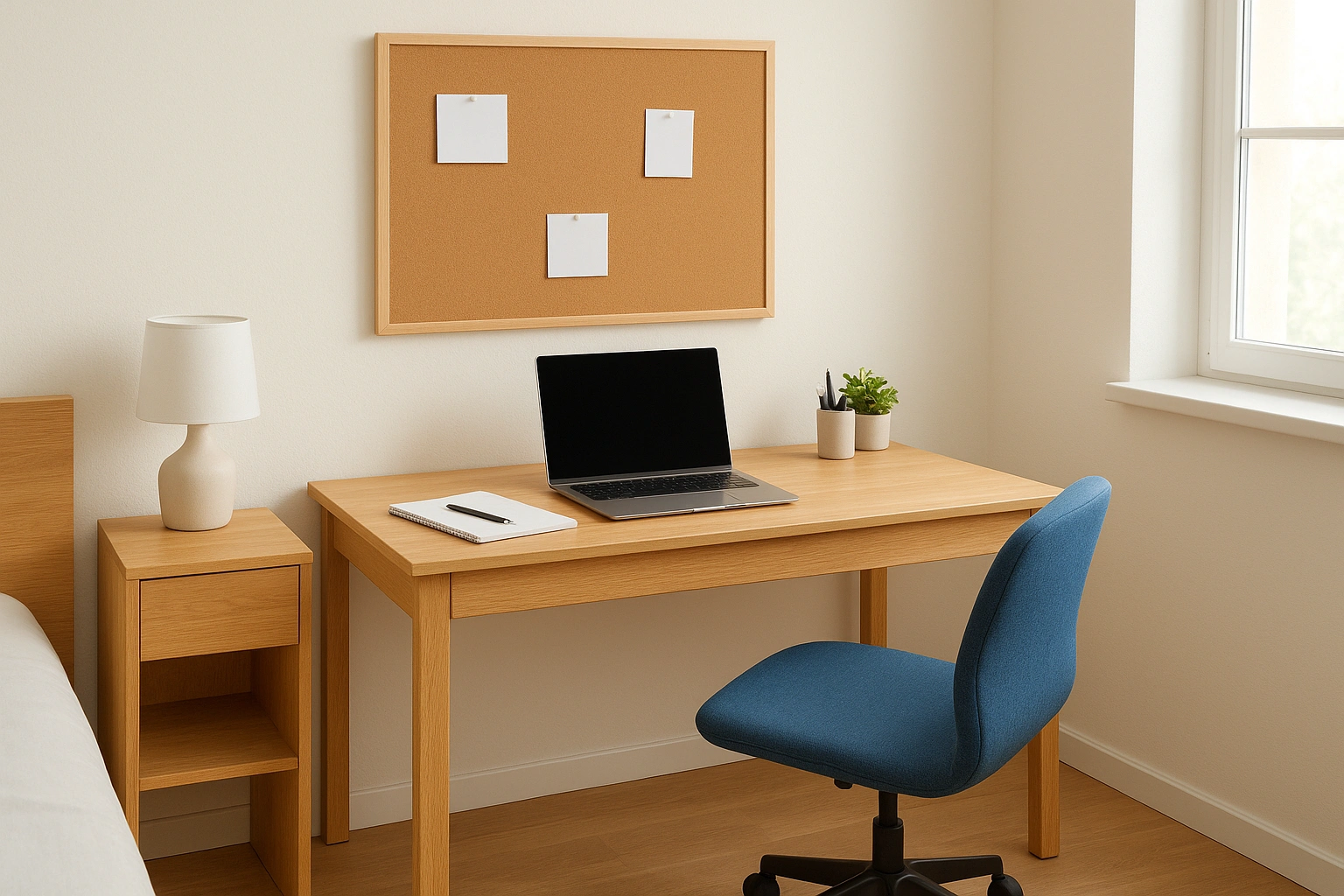
A spare bedroom that doubles as a home office five days a week and a guest room on holidays doesn't pass the exclusive use test, no matter how good your intentions are. The IRS wants a defined area, even if it's just part of a room, that's dedicated to business and nothing else. A desk in the corner of your living room can qualify if you never use that specific space for anything personal, but the second your kids do homework there or you binge-watch TV at that desk, you've broken exclusivity. Here's what typically passes and fails:
| Setup | Passes Exclusive Use? |
|---|---|
| Spare room used only for client work | Yes |
| Home office that doubles as a guest room | No |
| Defined desk area in a shared room, used only for business | Yes |
| Kitchen table used for both meals and invoicing | No |
Principal place of business
Beyond exclusive and regular use, your home office generally needs to qualify as your principal place of business. That doesn't mean it has to be the only place you work. If you meet clients elsewhere but do all your administrative work, billing, and scheduling from home, the IRS still considers your home your principal place of business under the administrative and management activities rule. A contractor who works on job sites all day but handles invoicing and bookkeeping from a home office at night typically qualifies under this exact provision, according to the IRS Publication 587.
If you can't point to a specific space you use only for business, you don't have a home office deduction, you have a hopeful guess.
Employees generally don't qualify anymore
One rule trips up a lot of people who used to claim this deduction: W-2 employees can't claim it. The Tax Cuts and Jobs Act suspended the unreimbursed employee business expense deduction from 2018 through 2025, which means remote workers who get a W-2 from their employer are out of luck, even if their setup would otherwise qualify. This deduction is now almost entirely the domain of the self-employed, freelancers, independent contractors, and small business owners filing a Schedule C form, partnership return, or S-Corp return. If you're not sure which category you fall into, that distinction alone can save you from claiming a deduction the IRS won't allow.
How to calculate your home office deduction
Once you've confirmed you qualify, the math itself is straightforward, but you still have to pick a method before you can run the numbers. The IRS gives you two paths: the simplified method and the regular method, sometimes called the actual expense method. Both start from the same square footage, but they arrive at very different deduction amounts depending on your home's cost structure.
The simplified method
Under the simplified method, you multiply the square footage of your home office by a flat $5 per square foot, up to a maximum of 300 square feet. That caps your deduction at $1,500 no matter how expensive your home is. There's no need to track utility bills, depreciation, or a percentage of your mortgage interest. You just measure the space, do the multiplication, and enter the figure on Schedule C.
Simplified method formula:
Office square footage (max 300) x $5 = deduction

Example: 180 sq ft x $5 = $900 deduction
The regular method
The regular method requires more work but often pays off more, especially if you own your home or pay high rent. You calculate the business-use percentage of your home by dividing your office square footage by your home's total square footage, then apply that percentage to your actual housing expenses.
Regular method formula:
Office sq ft / Total home sq ft = Business-use percentage

Business-use percentage x (rent, mortgage interest, utilities,
insurance, repairs, depreciation) = deduction
The simplified method saves you time, but the regular method is where the real deduction usually lives if your home costs are high.
Homeowners get an added benefit under the regular method: depreciation on the business-use portion of the home, calculated using IRS tables in Publication 587. Renters skip depreciation entirely but still deduct their share of rent, renters insurance, and utilities. Either way, you need documentation to back up every figure, since the regular method invites more IRS scrutiny simply because it involves more moving parts.
What counts as an eligible expense
Like other business expense write-offs, expenses under the regular method fall into two buckets: direct and indirect. Direct expenses, like painting your home office, are fully deductible. Indirect expenses, like your homeowners insurance or the electric bill for the whole house, get prorated by your business-use percentage. Here's a quick breakdown:
| Expense Type | Example | Deductible Amount |
|---|---|---|
| Direct expense | Repainting the office | 100% |
| Indirect expense | Homeowners insurance | Business-use % only |
| Indirect expense | Utilities | Business-use % only |
| Depreciation (homeowners only) | Portion of home's cost basis | Business-use % only |
Getting this calculation right the first time matters, because switching methods between tax years triggers additional recordkeeping and, in some cases, depreciation recapture rules you'll want a preparer to walk through with you.
Simplified vs. actual expense method: which to choose
Choosing between the two isn't about which method sounds easier, it's about which one puts more money back in your pocket. Most filers assume the simplified method is the obvious choice because it skips the paperwork, but that convenience comes at a real cost if your actual housing expenses run high. The right call depends entirely on your square footage, your home costs, and how much time you're willing to spend on recordkeeping. Getting this decision right is one of the more overlooked pieces of the home office deduction rules, since the IRS lets you pick a different method each year without penalty.
When the simplified method makes sense
Small home offices in modest housing markets usually come out ahead, or close to even, with the simplified method. If your office is under 300 square feet and your rent or mortgage isn't especially high, the flat $5-per-square-foot rate can land close to what you'd get under the regular method anyway, without the burden of tracking every utility bill. Renters in lower-cost areas, part-time freelancers, and anyone who wants a clean, low-maintenance filing often do fine here. The tradeoff is a hard $1,500 ceiling, so once your space or your expenses grow, you're capping your own deduction.
When the actual expense method pays off
Homeowners in expensive markets, filers with larger dedicated offices, and anyone paying significant mortgage interest, property tax, or utility costs almost always come out ahead with the regular method. Depreciation alone can push the deduction well past what the simplified method allows, especially in a home where the business-use percentage is 15% or more. The catch is documentation: you need receipts, utility statements, and a clear calculation showing exactly how you arrived at your business-use percentage.
If your home office costs more to run than $1,500 a year in prorated expenses, the simplified method is quietly costing you money.
Comparing the two methods
| Factor | Simplified Method | Regular Method |
|---|---|---|
| Recordkeeping | Minimal | Extensive |
| Maximum deduction | $1,500 | No fixed cap |
| Depreciation allowed | No | Yes (homeowners) |
| Best for | Small offices, renters, low-cost housing | Larger offices, homeowners, high-cost areas |
| Audit complexity | Lower | Higher |
Running both calculations before you file is the only reliable way to know which one wins for your specific numbers. Testing takes maybe ten minutes if you already have your square footage and a year of housing expenses handy, and the difference can easily run into hundreds of dollars. Preparers who handle a return review before filing regularly see filers stick with whichever method they used last year out of habit, even when switching would have meant a larger refund.
Special cases: employees, side gigs, and multiple businesses
Not every home worker fits the standard self-employed mold, and the home office deduction rules apply differently depending on where your income actually comes from. A remote W-2 employee, a freelancer juggling a side gig alongside a day job, and a business owner running two separate ventures out of the same house all hit different walls when they try to claim this deduction. Knowing which category you fall into before you file saves you from claiming a write-off the IRS won't allow, or missing one you're entitled to.
Remote employees still can't claim it
Despite how common remote work became after 2020, W-2 employees remain locked out of the home office deduction through 2025 under current federal law. It doesn't matter how dedicated your workspace is or how many hours you log there each week; if your employer issues you a W-2 and doesn't require you to maintain a home office as a condition of employment, the deduction isn't available on your federal return. A handful of states still allow a version of this deduction, so it's worth checking your state rules separately even when the federal answer is no.
Side gigs change the calculation
Freelancing on the side of a full-time job puts you in a different position entirely. If you earn 1099 income from freelance writing, consulting, or driving for a delivery app while also holding a W-2 job, you can claim the home office deduction against your self-employment income even though your day job income doesn't qualify, since that side income is what you report when calculating and paying taxes as a self-employed filer. The key is keeping the two income streams separate on your return and making sure the workspace you're claiming is used exclusively for the side business, not for your W-2 job's occasional remote day.
A side gig can unlock the home office deduction even when your full-time W-2 job can't.
Running multiple businesses from one home
Owning more than one business out of the same house adds a layer of complexity most filers don't expect. Each business needs its own defensible claim to exclusive use of whatever space it occupies, and you generally can't count the same square footage twice across two Schedule C filings or an LLC versus an S Corp return. Filers in this position often split their home office by function, allocating specific desks or rooms to each business, then calculating the deduction separately for each one:
- Single business, one office: standard square footage calculation applies
- Two businesses, shared office: allocate square footage between them based on actual use
- Two businesses, separate offices: calculate each deduction independently
Getting this allocation wrong is one of the more common errors we see when reviewing returns for clients who run multiple ventures. If your setup involves an LLC, an S-Corp, or more than one active business, working through the allocation with a preparer and a small business tax preparation checklist keeps each claim defensible on its own.
Example calculations for common home office setups
Numbers make these home office deduction rules easier to apply than any explanation on its own. Below are three common setups we see every filing season, run through both methods so you can see exactly where the dollars land. Each example assumes the space passes the exclusive and regular use tests already covered above.
The apartment renter with a small desk
Sofia rents a one-bedroom apartment and uses a 100-square-foot corner of her living room exclusively for freelance graphic design work. Her monthly rent is $1,800, and her home totals 700 square feet.

Simplified method: 100 sq ft x $5 = $500 deduction

Regular method:
100 / 700 = 14.3% business-use percentage
14.3% x ($21,600 annual rent + utilities + renters insurance)
= approximately $3,300 deduction
Here, the regular method wins by a wide margin because her rent is high relative to her income. Sofia's case is a good reminder that renters shouldn't default to the simplified method just because it's simpler.
The homeowner with a dedicated office
Marcus owns a 2,000-square-foot home and converted a 200-square-foot bedroom into a full-time office for his consulting business. His annual mortgage interest, property tax, insurance, and utilities total $18,000, and he's eligible for depreciation on the business-use portion of his home.
| Method | Calculation | Deduction |
|---|---|---|
| Simplified | 200 sq ft x $5 | $1,000 |
| Regular | 10% of $18,000 + depreciation | Roughly $2,400 |
A homeowner with real expenses almost always beats the $1,500 simplified cap once depreciation enters the picture.
Marcus's numbers show why homeowners in particular should run both calculations before filing. The gap between $1,000 and $2,400 is real money he'd otherwise leave unclaimed.
The side-gig freelancer
Priya works a W-2 job during the day and drives for a delivery app in the evenings, using a 60-square-foot desk area exclusively for scheduling, mileage tracking, and invoicing related to the gig. Her apartment totals 900 square feet, and her rent is $1,500 a month.
Simplified method: 60 sq ft x $5 = $300 deduction

Regular method:
60 / 900 = 6.7% business-use percentage
6.7% x $18,000 annual rent = approximately $1,200
Quick math like this still favors the regular method, but the difference is smaller than in Marcus's case because her business-use percentage is low. For a modest side gig, the extra recordkeeping might not be worth chasing an additional $900 unless she's already tracking these expenses for other reasons.
Running your own numbers this way, side by side, takes the guesswork out of which method actually serves you. The math rarely lies, even when the paperwork feels tedious.
Common mistakes that raise IRS red flags
Most home office deductions don't get denied because the taxpayer was doing something dishonest. They get denied because of small, avoidable errors that examiners are trained to spot immediately. Understanding the home office deduction rules well enough to avoid these mistakes protects a deduction you've legitimately earned, and it keeps your return from standing out for the wrong reasons.
Claiming a shared or dual-purpose space
The single most common error is claiming a room that fails the exclusive use test. A guest room that occasionally holds a home office desk, a dining table used for both dinner and invoicing, or a living room corner shared with a home gym all fail this standard the moment an examiner asks a follow-up question. The IRS doesn't require a wall or a door, but it does require a defined space used only for business, and blending that space with anything personal invalidates the whole claim, not just part of it.
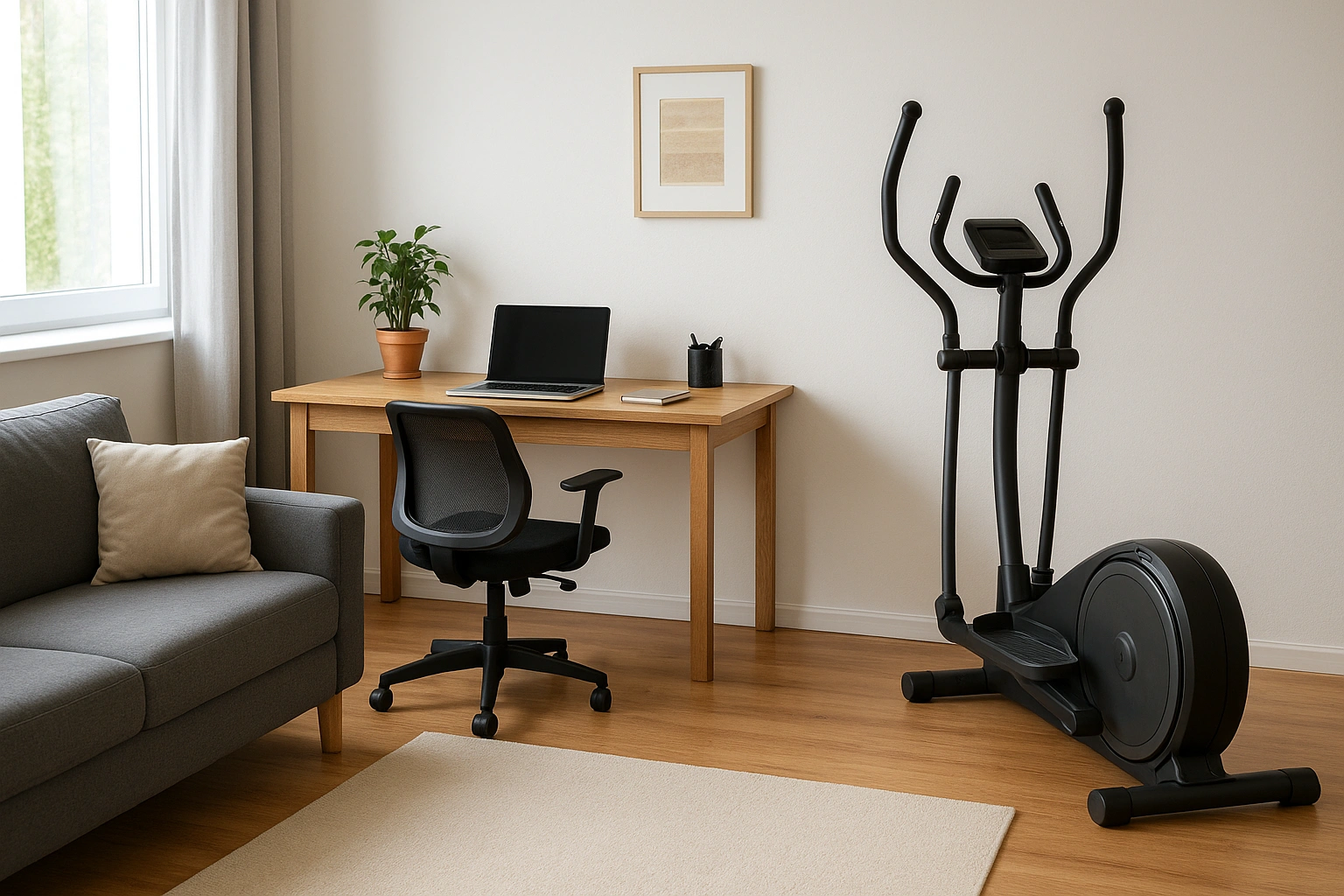
One mixed-use room can disqualify a deduction that would have been perfectly legitimate if it had a dedicated corner instead.
Rounding square footage or skipping measurements
Guessing at square footage instead of measuring it is another frequent red flag. Filers who round up an 80-square-foot nook to "about 100 square feet" are inflating a deduction amount without any documentation to back it up if the IRS asks. A tape measure and a simple floor plan sketch, kept with your tax records, settles this instantly and costs nothing.
Deducting personal expenses as business expenses
Homeowners sometimes deduct 100% of an indirect expense, like their full internet bill or their entire homeowners insurance premium, instead of prorating it by their business-use percentage. This is one of the fastest ways to overstate a deduction, and it's also one of the easiest for an examiner to catch, since utility and insurance statements are simple to cross-reference against the square footage claimed.
Here's a quick rundown of the mistakes we see most often when reviewing self-prepared returns:
- Claiming a space also used for personal activities
- Estimating square footage instead of measuring it
- Deducting 100% of a shared expense instead of the business-use percentage
- Switching between the simplified and regular method without adjusting prior depreciation records
- Failing to keep photos, receipts, or a floor plan on file
Missing documentation when the IRS asks
Even a fully legitimate deduction can unravel if you can't produce evidence when requested. Photos of the space, a floor plan, utility bills, and a brief written explanation of the business activity performed there should all live in one folder, physical or digital, from the day you start claiming the deduction. Preparers who handle a tax return review regularly see this exact gap: the deduction was correct, but the paperwork to prove it was never saved.
How the deduction affects a future home sale
Selling your home later doesn't erase the tax consequences of claiming a home office deduction today. Homeowners who use the regular method and take depreciation on their office space need to understand that the IRS eventually wants some of that benefit back, and the home office deduction rules cover exactly how that happens when you sell.
Depreciation recapture is the catch for homeowners
Every year you deduct depreciation on the business-use portion of your home, you're lowering your cost basis in that portion of the property. When you sell, the IRS requires you to recapture that depreciation, meaning you pay tax on it separately from your regular capital gain, typically at a maximum rate of 25% under Section 1250 rules, one of the more common property and investment tax questions we answer. This applies whether or not you actually used the full deduction to reduce your tax bill in prior years, so skipping the deduction doesn't avoid the recapture if you claimed it at any point.
Depreciation you deducted years ago doesn't disappear, it resurfaces as taxable income the day you sell your home.
The capital gains exclusion still mostly applies
The good news is that the home office deduction usually doesn't cost you the capital gains exclusion on the sale of your primary residence. Under IRS Section 121, single filers can exclude up to $250,000 of gain, and married couples filing jointly can exclude up to $500,000, as long as you owned and lived in the home for two of the last five years. As long as your home office was inside the same dwelling unit, not a separate structure like a detached studio, you generally don't need to allocate the sale between business and residential use for purposes of the exclusion itself. The depreciation recapture still applies on top of that exclusion, but it's calculated separately and doesn't reduce the amount of gain you're allowed to exclude overall.
Simplified method sidesteps recapture entirely
Filers who used the simplified method in the years they claimed the deduction have an easier exit. Because the simplified method doesn't involve depreciation, there's nothing to recapture when you sell, regardless of how many years you claimed it. This is one more reason homeowners planning to sell within a few years sometimes lean toward the simplified method even when the regular method would produce a slightly larger annual deduction, trading a bigger yearly write-off for a cleaner sale down the road.
| Method Used | Depreciation Recapture on Sale |
|---|---|
| Simplified method | None |
| Regular method (homeowner) | Yes, taxed up to 25% |
Keeping a running log of depreciation claimed each year, alongside your other home office records, makes this calculation painless whenever you eventually list the house.
Getting your home office deduction right
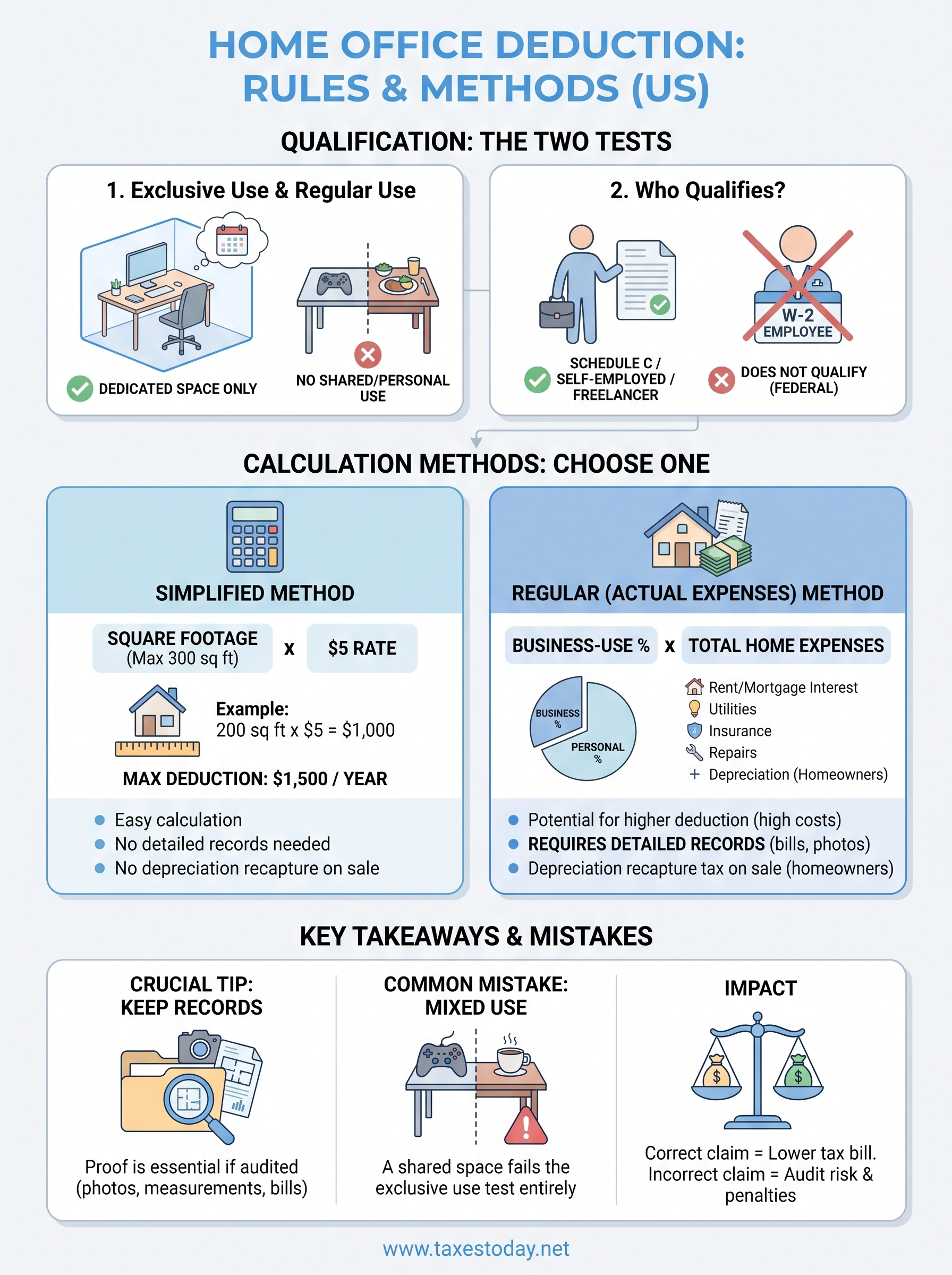
Qualifying for the home office deduction comes down to a handful of concrete tests: exclusive use, regular use, and a defensible calculation method you can back up with real records. Get those pieces right and you've got a deduction that survives scrutiny and actually lowers what you owe, not a guess that unravels the moment the IRS asks a follow-up question.
Every example in this article, from Sofia's apartment desk to Marcus's dedicated office, shows the same pattern: the numbers only work in your favor when you measure carefully, pick the right method, and keep documentation from day one. Skipping that groundwork costs you either a legitimate refund or an uncomfortable notice later.
If your setup involves a side gig, multiple businesses, or a home sale on the horizon, the math gets complicated fast. Our team handles exactly this kind of return every season, so file your Schedule C with a CTEC-certified preparer starting at $99 before this year's deadline.