


Schedule C Expense Categories List: 2026 Guide for Sole Prop
Filing your Schedule C means sorting every business expense into the right bucket, and getting it wrong can cost you real money. Whether you overpay the IRS or raise red flags that trigger an audit, the stakes are high. A clear schedule c expense categories list is exactly what you need to classify your deductions correctly and keep more of what you earned this year.
The IRS gives sole proprietors and single-member LLCs roughly 20 expense categories on Schedule C (Form 1040), each with its own rules about what qualifies. Some are straightforward, office supplies, for example. Others, like the home office deduction or vehicle expenses, have specific requirements that trip people up every filing season. Knowing where each dollar goes isn't just good bookkeeping; it's how you maximize your legitimate deductions without crossing any lines.
At TaxesToday, our CTEC-certified and IRS-registered preparers have spent over 15 years helping freelancers, independent contractors, and small business owners get their Schedule C right. We built this guide to give you the same clarity our clients get, a complete breakdown of every expense category, what belongs in each one, and the common mistakes to avoid. Use it as your reference while you organize your records, or reach out to our team if you'd rather hand the whole thing off to a professional.
1. TaxesToday Schedule C prep support
Getting your Schedule C categories right takes more than reading a schedule c expense categories list on your own. Our team at TaxesToday works with you directly to review your income and expenses, assign each item to the correct line, and make sure you are not leaving deductions on the table or claiming things incorrectly.
What you get help with
When you work with TaxesToday, you get a full Schedule C preparation service from a licensed, CTEC-certified preparer. We go through your records line by line, from gross receipts down to the other expenses section in Part V, and verify that each deduction lands in the right category. We also handle the cost of goods sold calculation, vehicle expense elections, home office deductions, and depreciation including Section 179, so nothing gets missed or misplaced.
Putting contract labor under wages, for example, distorts your self-employment tax calculation and can flag your return for IRS review.
Who it helps most
This service is built for freelancers, independent contractors, and sole proprietors who earn 1099 income, run a side business, or operate a single-member LLC. It also works well for gig workers, consultants, tradespeople, and creatives who need an accurate Schedule C but do not want to sort through IRS instructions on their own.
What to bring to get your categories right
Coming prepared saves time and produces a more accurate return. Before your session, gather the following:
- All income records: 1099-NEC, 1099-K, and any cash or invoice records not covered by a 1099
- Expense receipts and bank statements: organized by month if possible
- Mileage logs: total business miles, dates, and the purpose of each trip
- Home office measurements: square footage of your workspace and total home square footage
- Payroll or contractor records: if you paid wages or used contract labor during the year
- Prior-year Schedule C: helps identify carryovers and compare year-over-year figures
Bringing these documents lets your preparer assign every dollar to the correct Schedule C line without guessing and cuts the time your session takes significantly.
2. Income categories
Before you work through any schedule c expense categories list, you need your income numbers correct. Schedule C starts with revenue, and the IRS cross-references what you report against 1099s that payers submit, so every dollar must land in the right place before you move to deductions.
Gross receipts and sales
Line 1 is where you report your total gross receipts and sales for the year. This includes every payment you received for services or products, regardless of how it was paid. Common sources include:
- Client invoices paid by check or direct deposit
- Cash payments for goods or services
- Payments received through apps like Venmo, PayPal, or Zelle
1099-NEC and 1099-K reporting without double counting
If a client sent you a 1099-NEC and you also received payments through a platform that issued a 1099-K, that same income can appear on both forms. You report your total revenue once on line 1, not once per form.
Double-counting 1099 income inflates both your taxable income and your self-employment tax, so verify your totals against your own records before you enter anything.
Returns, allowances, sales tax collected, and tips
Line 2 covers returns and allowances, which are refunds you issued to customers during the year. Sales tax you collected and remitted to the state is not your income, so it comes off here. Tips you received for your work, on the other hand, are fully taxable and belong on line 1.
Other income on Schedule C and when to use it
Line 6 captures miscellaneous business income that does not fit into gross receipts, such as business-related prizes, awards, or fuel tax credits. Only use this line for income that is directly connected to your business activity, not personal windfalls or investment gains.
3. Cost of goods sold categories
Not every sole proprietor needs to complete the cost of goods sold (COGS) section on Schedule C, but if you sell physical products, you do. Part III of Schedule C walks you through calculating what it actually cost you to produce or purchase the goods you sold during the year, and that number directly reduces your gross profit on line 4.
Who needs the cost of goods sold section
You need this section if your business buys, makes, or resells physical products. Retailers, wholesalers, manufacturers, and craftspeople all fall into this category. Service-only businesses, like consultants or freelance writers, skip Part III entirely.
What counts as inventory versus supplies
Inventory is product you purchase or produce with the intent to sell. Supplies are items you consume while running your business, things like packaging tape, cleaning products, or printer paper. Supplies belong on line 22 of your schedule c expense categories list, not in COGS.
COGS line items on Schedule C and what belongs where
Part III asks for your beginning inventory, purchases made during the year, cost of labor used in production, materials and supplies tied to production, and ending inventory. Your ending inventory value carries forward as next year's beginning inventory, so accuracy matters every year.
Miscounting your ending inventory shifts profit between tax years and can trigger IRS questions when your numbers do not match prior returns.
Common COGS mistakes that change your tax bill
Two errors show up repeatedly: including personal purchases in inventory costs and forgetting to back out items you withdrew from inventory for personal use. Both errors misstate your gross profit and change how much self-employment tax you owe.
4. Vehicle expenses category
Vehicle costs are one of the largest deductions available in any schedule c expense categories list, but they also come with strict rules. The IRS scrutinizes vehicle deductions closely, so you need to understand exactly where these costs go and how to calculate them before you file.
Where vehicle costs go on Schedule C
Your vehicle deduction flows through line 9, labeled "Car and truck expenses." This is separate from any vehicles you rent or lease for short periods, which go on line 20a. Line 9 covers vehicles you own or lease long-term and use for business purposes.
Standard mileage versus actual expenses
You have two calculation methods to choose from. The standard mileage rate for 2025 is 70 cents per mile, and you multiply that rate by your total business miles. The actual expense method lets you deduct a percentage of your real costs, including gas, insurance, repairs, registration, and depreciation, based on how much you used the vehicle for business.
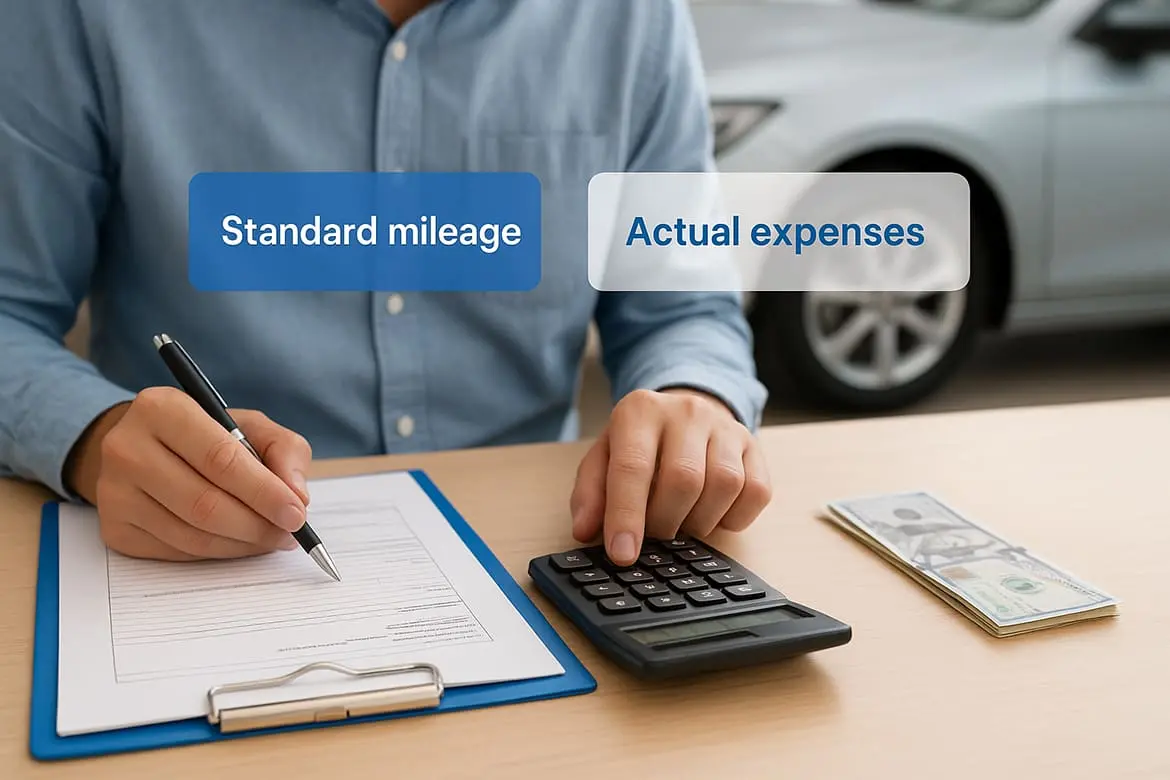
You must choose the standard mileage method in the first year you use a vehicle for business if you want the option to switch methods later.
What counts as business miles versus commuting
Business miles include driving to client meetings, job sites, supply runs, and other work-related trips. Commuting miles, meaning the drive from your home to a regular fixed workplace, do not count and are never deductible.
Mileage logs and records the IRS expects
The IRS expects a contemporaneous mileage log that records the date, destination, business purpose, and miles for every trip. A spreadsheet or mileage-tracking app works fine, as long as you maintain it throughout the year rather than reconstructing it at tax time.
5. Home office category
The home office deduction is one of the most valuable entries in any schedule c expense categories list, but it also has the most specific requirements. Claiming it incorrectly is a quick way to trigger IRS scrutiny, so understanding the rules before you file matters.
The tests you must meet to claim it
Your home office qualifies only if you use a specific area of your home regularly and exclusively for business. That space must also be your principal place of business, or a place where you meet clients or customers in the normal course of your work.
Using the same room for personal activities, even occasionally, disqualifies the entire deduction.
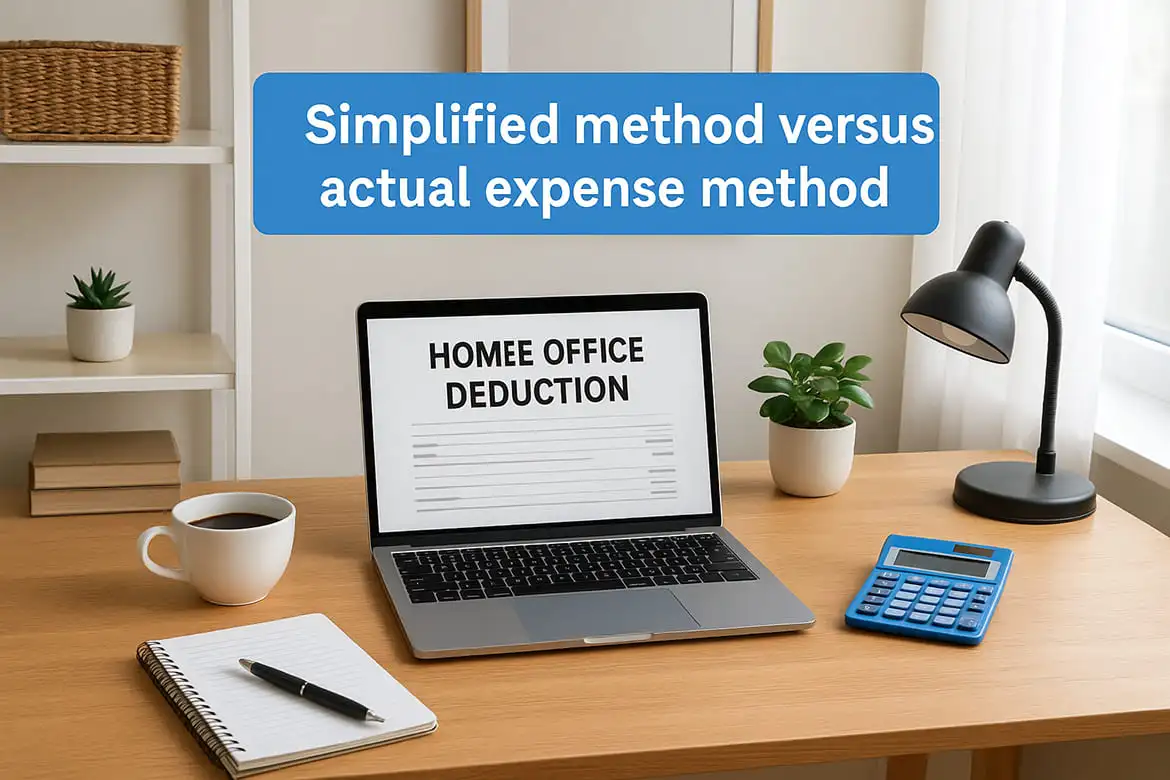
Simplified method versus actual expense method
The simplified method gives you $5 per square foot of your office space, up to 300 square feet, for a maximum deduction of $1,500. The actual expense method lets you deduct a percentage of your real home costs, based on the ratio of your office square footage to your total home square footage.
What expenses you can include and what you cannot
Under the actual method, qualifying expenses include mortgage interest or rent, utilities, homeowners insurance, and repairs that apply to the whole home. Costs that benefit only areas outside your office do not count.
How home office ties to Schedule C line 30
Your home office deduction flows to line 30 on Schedule C. If your business shows a loss, the deduction may be limited, so work through the calculation carefully before you enter the final number.
6. Operating expense lines 8 to 27a
Lines 8 through 27a form the core of your Schedule C expense categories list. Each line is specific, and placing the wrong expense on the wrong line does not just look sloppy; it can change your self-employment tax calculation and flag your return for IRS review. The table below gives you a clear reference for every operating expense line.
| Line | Category | What belongs here |
|---|---|---|
| 8 | Advertising | Ads, business cards, website costs, promotional materials |
| 9 | Car and truck expenses | Standard mileage or actual vehicle costs (see section 4) |
| 10 | Commissions and fees | Sales commissions paid to non-employees, referral fees |
| 11 | Contract labor | Payments to 1099 contractors who are not your employees |
| 12 | Depletion | Natural resource extraction businesses only |
| 13 | Depreciation and Section 179 | Long-term business assets; attach Form 4562 |
| 14 | Employee benefit programs | Health insurance and FSA contributions for your employees |
| 15 | Insurance | Business liability, professional liability, and property coverage |
| 16a / 16b | Interest | Mortgage interest on business property (16a); other business loan interest (16b) |
| 17 | Legal and professional services | Attorney fees, CPA fees, and tax preparation costs |
| 18 | Office expense | Postage, printer ink, and small consumable office items |
| 19 | Pension and profit sharing | Contributions to employee retirement plans |
| 20a | Rent or lease vehicles | Short-term vehicle rentals for business use |
| 20b | Rent or lease property | Office, retail, or storage space you rent |
| 21 | Repairs and maintenance | Fixing business equipment or property you own |
| 22 | Supplies | Consumable items used directly in your business operations |
| 23 | Taxes and licenses | Business licenses, payroll taxes, and state business taxes |
| 24a | Travel | Airfare, hotels, and ground transportation for business trips |
| 24b | Meals | 50% deductible business meals with clients or during work travel |
| 25 | Utilities | Phone, internet, and electricity for your dedicated business space |
| 26 | Wages | Gross wages paid to your W-2 employees |
| 27a | Other expenses | Legitimate costs that do not fit any line above; detail them in Part V |
Never put contractor payments on line 26 with wages; that error misstates your payroll tax obligations and draws IRS attention to your return.
7. Other expenses and audit-proof records
Line 27a points to Part V of Schedule C, where you list any legitimate business expense that does not fit the named lines above. This section rounds out your complete schedule c expense categories list and gives you a place for costs that are real but do not have a dedicated home elsewhere on the form.
Part V other expenses list and how specific to get
Part V asks you to name each expense and provide a dollar amount. Broad labels like "miscellaneous" invite IRS questions. Instead, write specific descriptions such as "annual software subscription" or "professional development course," so each entry is self-explanatory without additional documents.
Common deductions people miscategorize
Two errors come up often: placing personal phone bills on line 25 without calculating the business-use percentage, and mixing bank fees and merchant processing fees into office expense on line 18. Both belong in Part V with clear, specific descriptions.
Miscategorizing an expense does not mean you lose the deduction, but it does make your return harder to defend if the IRS asks questions.
Expenses you cannot deduct on Schedule C
Personal expenses, commuting costs, clothing you can wear outside of work, and fines or penalties paid to government agencies are all off-limits, regardless of how you label them on the form.
Documentation rules that protect your deductions
Keep receipts, invoices, and bank statements for every deduction you claim. The IRS standard is three years from your filing date, but six years applies if the agency suspects a significant understatement of income.
Next steps before you file
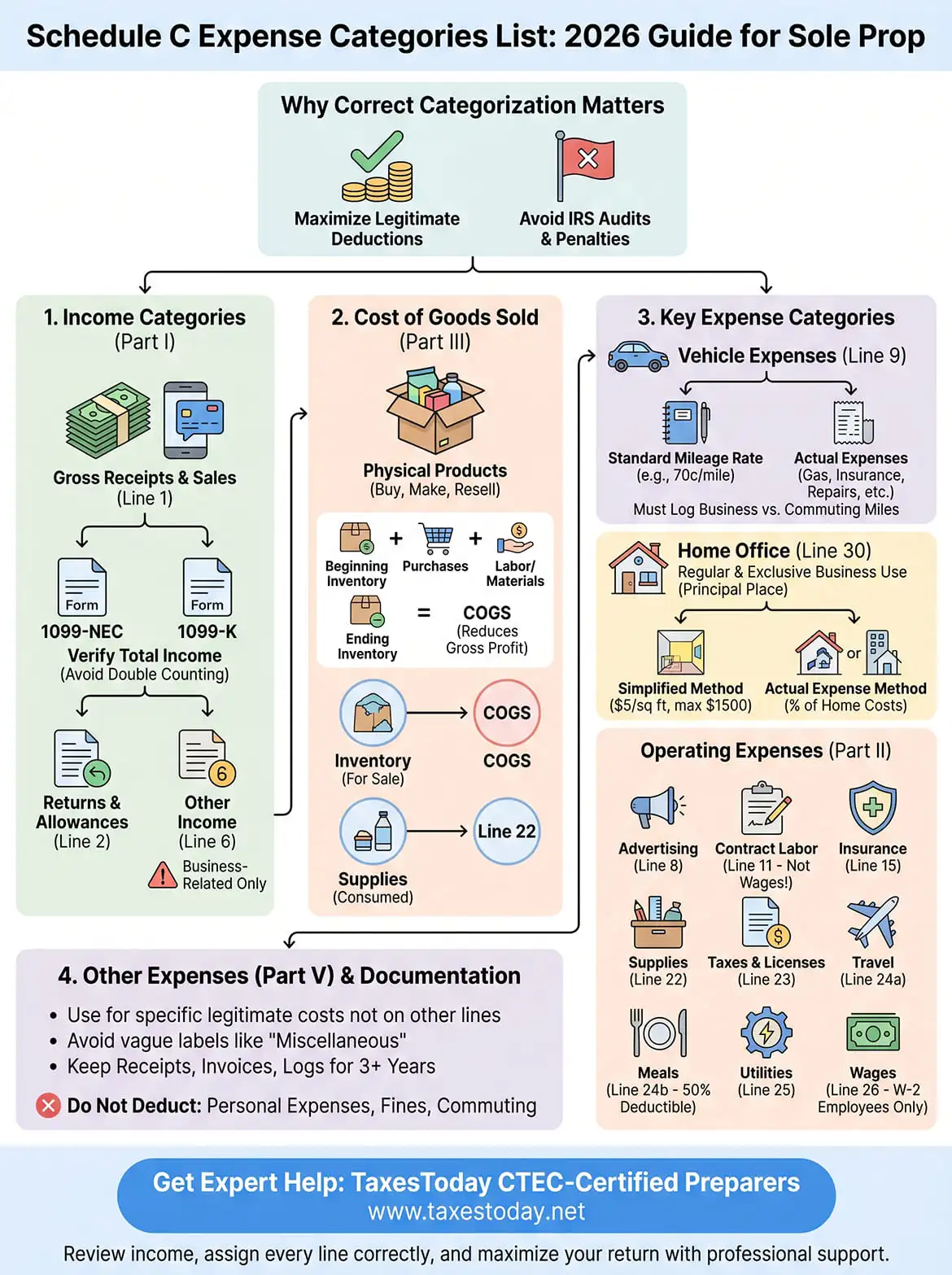
You now have a complete schedule c expense categories list to work from, covering every income line, COGS calculation, vehicle and home office deduction, and the operating expense lines that form the backbone of Part II. The next move is to pull your records together, match each expense to its correct line, and verify that your income totals align with every 1099 you received this year. Accuracy at this stage protects you from IRS notices and makes sure you walk away with every deduction you actually earned.
If sorting through all of this feels like more than you want to take on alone, our team is ready to help. TaxesToday has CTEC-certified and IRS-registered preparers who specialize in exactly this kind of return. You bring the records, and we handle the rest, line by line, correctly. Schedule your Schedule C tax preparation today and file with confidence.