


How to Choose a CPA for Tax Preparation: 6 Tips
Hiring the wrong preparer costs you more than a bad experience. It costs you money, in missed deductions, in penalties, or in an IRS letter you weren't expecting. If you're searching for a cpa for tax preparation, you already know your situation, whether it's self-employment income, a small business, or a return you're not confident filing yourself, needs more than a generic software program can offer.
So how do you actually pick the right one? It comes down to checking credentials, understanding their experience with situations like yours, and asking the right questions before you hand over your financial documents. A CPA license alone doesn't guarantee they know 1099 income, Schedule C deductions, or multi-state filing the way a specialist does.
This article walks through six practical tips for choosing a CPA, from verifying licensing and certification to comparing pricing and communication style. We work with individuals, freelancers, and small businesses across California and remotely nationwide, so we've seen firsthand what separates a preparer who saves you money from one who just fills out forms.
1. Match their specialization to your tax situation
Not every CPA handles every kind of return. Some spend their careers on corporate audits and estate planning, while others focus on the returns that most individuals and small businesses actually need filed every April. Before you hire anyone, figure out whether their day-to-day work actually overlaps with yours. A cpa for tax preparation who mostly serves W-2 employees isn't the right fit if you're a freelancer juggling 1099s, and a generalist accountant may not know the nuances of self-employed tax filing the way a specialist does, so it helps to know how to pick the right tax pro for your situation.
What to look for
Ask directly about the CPA's client mix. Do they regularly prepare Schedule C returns, handle single-member LLCs, or work with S-Corp owners? If you're a non-resident or foreign student on an F-1 or J-1 visa, you need someone who's filed Form 8843 and 1040NR returns before, not someone learning on your dime. If you have unfiled prior-year returns, confirm they handle back tax preparation as a normal part of their practice, not a rare exception.
Why it matters
Specialization changes outcomes. A preparer familiar with self-employment deductions knows to ask about your home office, mileage, and equipment purchases before you even bring them up. One who mostly does simple individual returns might miss those entirely, leaving money on the table or, worse, triggering an audit flag from a mistake they didn't catch.
A CPA's title tells you they're licensed. Their client history tells you if they're actually good at your kind of return.
Questions to ask before hiring
A short conversation before you sign anything saves you from a mismatch later. Bring these questions to your first call or consultation:
- How many returns like mine have you prepared in the last year?
- Do you have experience with self-employment, small business, or non-resident filings specifically?
- Can you walk me through a deduction I might be missing based on my situation?
- Have you filed amended or back-year returns for clients in circumstances similar to mine?
- What happens if my return needs corrections after filing?
Questions like these separate a preparer who's guessing from one who's genuinely equipped to handle your tax situation.
2. Verify credentials, licensing, and IRS registration
Anyone can call themselves a "tax professional," but not everyone carries the credentials to back it up. Before you hire a cpa for tax preparation, confirm they hold an active CPA license in their state and a valid Preparer Tax Identification Number (PTIN) from the IRS. You can verify PTIN status directly through the IRS's preparer directory. A licensed, CTEC-certified preparer with real years of experience brings a level of accountability a random online preparer simply doesn't, which is why it's worth meeting the certified preparer who will handle your return before you commit.
What to look for
Check for state licensing, IRS registration, and any additional certifications relevant to your filing, like an Enrolled Agent designation if IRS representation matters to you. Ask how long they've been practicing and whether their license is currently in good standing.
Why it matters
Credentials aren't just paperwork. They determine whether your preparer can legally represent you if the IRS ever questions your return, and they signal ongoing education in a tax code that changes every year.
An unlicensed preparer can file your return, but only a credentialed one can stand beside you if the IRS comes calling.
Questions to ask before hiring
Get clear answers before you commit:
- Are you currently licensed and in good standing in this state?
- What's your PTIN, and can I verify it?
- Are you authorized to represent me before the IRS if needed?
- How many years have you been preparing returns professionally?
3. Compare pricing and fee transparency
Price shouldn't be the only factor in choosing a cpa for tax preparation, but it matters, especially when quotes for the same return can range from $150 to $600 depending on who you ask. A trustworthy preparer tells you upfront what your return will cost, not after they've already started digging through your documents. Watch for vague pricing structures that leave room for surprise add-on fees once the work is nearly done.
What to look for
Look for a published or easily quoted fee structure tied to your specific filing type, not a one-size-fits-all number, the way affordable tax preparation services that fit your filing are usually priced. Compare what's included at each tier:
| Filing complexity | Typical range | What's usually included |
|---|---|---|
| Simple individual (W-2 only) | $99-$150 | Federal + one state return |
| Self-employed / Schedule C | $200-$400 | Business deductions, quarterly estimates review |
| Small business / S-Corp | $350-$700+ | Business return, K-1s, payroll considerations |
Why it matters
Transparent pricing tells you the preparer has a defined process instead of charging by the hour and hoping you don't ask questions. It also lets you budget accurately and compare quotes apples-to-apples across providers, including low cost tax filing options near you.
If a preparer can't quote you a price before seeing your full documents, they probably can't explain their process either.
Questions to ask before hiring
Before committing, ask:
- What's included in your base price, and what triggers an extra charge?
- Do you charge more for amended or back-year returns?
- Is e-filing included, or billed separately?
- Will I get a written quote before you start?
4. Evaluate availability, communication, and service format
Tax problems don't wait for business hours, and neither should your preparer. When you're comparing a cpa for tax preparation, find out how they actually work: do they respond within a day, or do you wait a week for a callback during busy season? Also confirm whether they offer virtual and in-person options, since some situations, like reviewing a stack of receipts or discussing a complicated back-tax filing, go smoother face to face, while a straightforward W-2 return might be perfectly fine handled through a virtual tax preparation service and a secure portal.
What to look for
Look for a preparer who states clear turnaround times and communicates through a method you're comfortable with, whether that's email, phone, or a client portal. Check if they offer both remote and local appointments, especially if you're in California but want the flexibility of filing from home.
Why it matters
Poor communication during tax season leads to missed deadlines and rushed filings. A preparer who's hard to reach in February will be even harder to reach when your return needs a correction in April.
The best CPA is the one who actually answers when you need them, not just the one who filed your return last year.
Questions to ask before hiring
Raise these before signing on:
- What's your typical response time during tax season?
- Do you offer virtual filing, in-person appointments, or both?
- Who do I contact if you're unavailable near the deadline?
- Can I reach you after filing if a question comes up?
5. Check reviews, reputation, and IRS support experience
Online reviews tell you what a resume can't: how a cpa for tax preparation actually treats clients under pressure. Look past the star rating and read what people say about accuracy, responsiveness, and how the preparer handled problems when they came up. A pattern of complaints about missed deadlines or unreturned calls tells you more than a handful of five-star ratings ever will.
What to look for
Search Google reviews, Yelp, and the Better Business Bureau for consistent feedback across multiple platforms, not just one glowing testimonial on their homepage, and compare local reviews and costs for tax preparers near you. Pay attention to reviews mentioning IRS notice help, since that's where a preparer's real expertise gets tested. Ask for references from clients with situations similar to yours, especially if you're dealing with back taxes or an amended return.
Why it matters
Reputation reflects consistency. A CPA who shows up for clients during an audit or a confusing IRS letter is the same one who'll catch errors before they become problems. Filing a return is only half the job; standing behind it when questions arise is the other half.
A CPA's real reputation shows up not in how they file your return, but in how they handle it when the IRS pushes back.
Questions to ask before hiring
Don't skip this step before signing anything:
- Can you share references from clients with a similar tax situation?
- Have you represented clients through an IRS audit or notice?
- What's your process if the IRS flags my return after filing?
- How do you handle a mistake if one happens on your end?
Choosing the CPA that's right for you
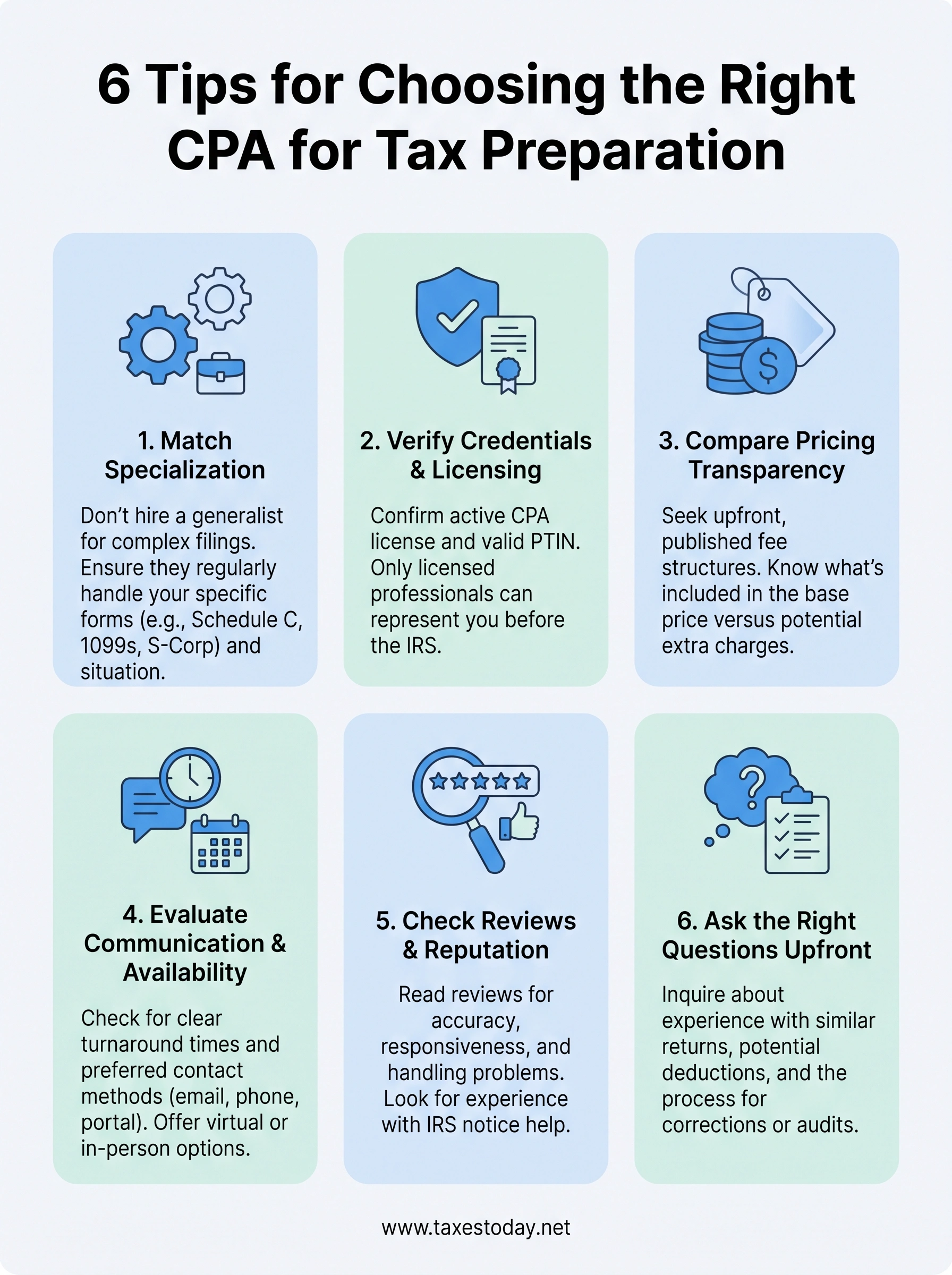
Finding the right cpa for tax preparation comes down to matching expertise to your actual filing needs, confirming credentials instead of assuming them, and asking pointed questions before you commit your documents to anyone. Skip any one of these steps and you risk overpaying, missing deductions, or scrambling when the IRS sends a letter you weren't prepared for.
Run through the six checks in this article with any preparer you're considering, whether that's specialization, licensing, pricing, communication, or reputation. A few good questions upfront save you months of frustration later.
If you're ready to work with preparers who check every one of these boxes, licensed, CTEC-certified, transparent on pricing, and experienced with W-2, self-employed, small business, and non-resident returns, start your return with TaxesToday.net from $99 and file with someone who actually knows your situation.